Winter 2025 - Vol. 20, No. 4
MEDICAL HISTORY
The Hospitals of Lancaster County
Nikitas J. Zervanos, MD
Director Emeritus, Department of Family and Community Medicine
Director Emeritus, Family Medicine Residency Program, 1969-2002
Lancaster General Hospital
Editor’s note: This series of articles by Dr. Zervanos focuses on the circumstances, institutions, and people who built the medical community now recognized as Penn Medicine Lancaster General Health. Much of the information comes from manuscripts he authored and donated to the American Academy of Family Physicians Foundation. This installment discusses the hospitals of Lancaster County.
Before community hospitals existed in Lancaster County, there were military hospitals, dating back to the American Revolutionary War era. These included Ephrata Hospital, established in the Cloisters; Lititz Hospital, located in the Moravian Brothers’ House, which is still standing as a Revolutionary Memorial next to the Lititz Moravian Church; and a hospital in Manheim housed in Saint Paul’s Reformed Church.
1 While there is no longer a military hospital here in Lancaster County, the Lebanon County Veterans Administration hospital serves this area and has an outreach clinic in Willow Street to meet the needs of veteran patients.
THE MUSSER HOMESTEAD AND HOSPITAL
The Musser Hospital was located in the same building as the medical practice and homestead of Dr. Benjamin Musser (1749-1820); it may have been the first private hospital in Lancaster County. Other practitioners maintained infirmaries for seriously ill patients within the confines of their medical practice buildings. The Musser homestead still stands in Manor Township.
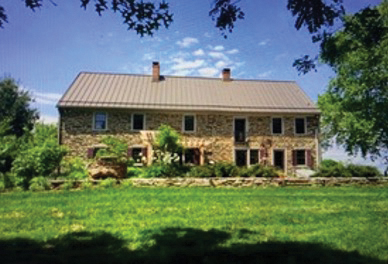
The homestead of the Musser family served as what may have been Lancaster County’s first private hospital. The building — now a private home — still stands in Manor Township. Photo courtesy of the author.
THE LANCASTER COUNTY ALMSHOUSE AND HOSPITAL
Construction of the first community hospital in Lancaster County began in 1797 and was completed in 1800. The intent of the Lancaster County Almshouse, as the name implies, was to accommodate poor people who could not take care of themselves and/or who did not have sufficient family support. Ideally, the goal of those staying at the Almshouse was to learn to care for themselves; however, patient challenges were both physical and mental, so long-term health care became a major concern. Thus, in 1807, a second building was erected and designated as a “commodious house” to be used as a hospital.
2
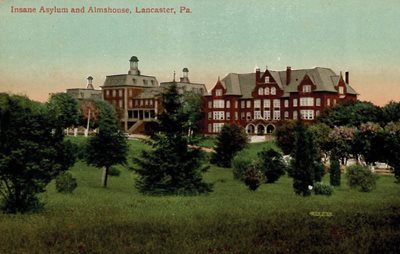 Postcard of the Lancaster County Almshouse and Hospital as it once stood in downtown Lancaster.
When the facility opened on December 2, 1800, Dr. John Perkins was appointed to serve as the attending physician, at a salary of $90 per year. In one day in November 1809, there were 28 patients. Although the rest of the buildings are now gone, the original building still stands and is considered the second-oldest standing hospital in the United States. It is located at 900 E. King Street in Lancaster, behind what was a long-term care facility known as Conestoga View, now named the Lancaster Nursing and Rehabilitation Center.
1
ST. JOSEPH’S HOSPITAL
By the early 1870s, with advancements in both medicine and surgery and as Lancaster grew and prospered, there was demand for another hospital, where more could be done for patients with catastrophic illnesses and especially life-threatening injuries.
In 1877, leading members of Lancaster’s Catholic community, led by the Rev. Father Ignatius Sagerer and the Society of St. John of God, built a hospital on the corner of W. Chestnut Street and College Avenue for $650. Its first medical director was Dr. John Light Atlee (1799-1885).
3 The new hospital remained in operation until June 1882, when it was forced to close due to severe financial difficulties. Thanks to Mother M. Agnes, superior general of the Third Order of St. Francis, and the Philadelphia Foundation, it reopened in 1883 as St. Joseph’s Hospital.
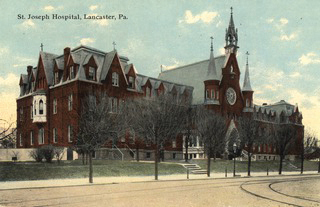 Postcard of St. Joseph’s Hospital, Lancaster, circa 1920-1929. Distributed by I. Steinfeldt, Lancaster, PA.
The third John L. Atlee, MD (1875-1950) greatly influenced the growth and development of St. Joseph’s Hospital and helped it become a well-regarded surgery center in Lancaster County.
4 Dr. Atlee was credited with the hospital’s reorganization and expansion and, along with his sons, John L. Atlee, MD, and William A. Atlee, MD, developed and expanded the surgical service, including the establishment of a residency program in surgery.
5
LANCASTER GENERAL HOSPITAL
In the early 1890s, the Lancaster County Almshouse and Hospital was devoted entirely to the care and needs of the poor, and St. Joseph’s Hospital was operating at capacity. With a growing population of over 150,000 people in the county and 30,000 residents in the city, the need for a third hospital had become a topic of considerable public interest and concern.
Lancaster General Hospital was founded in 1893, under the leadership of the charismatic Rev. D. Wesley Bicksler and with financial support from tobacco merchant Reuben Bertzfield and shoe merchant H. M. Ilyus. The original building still stands at 322 N. Queen Street.
6
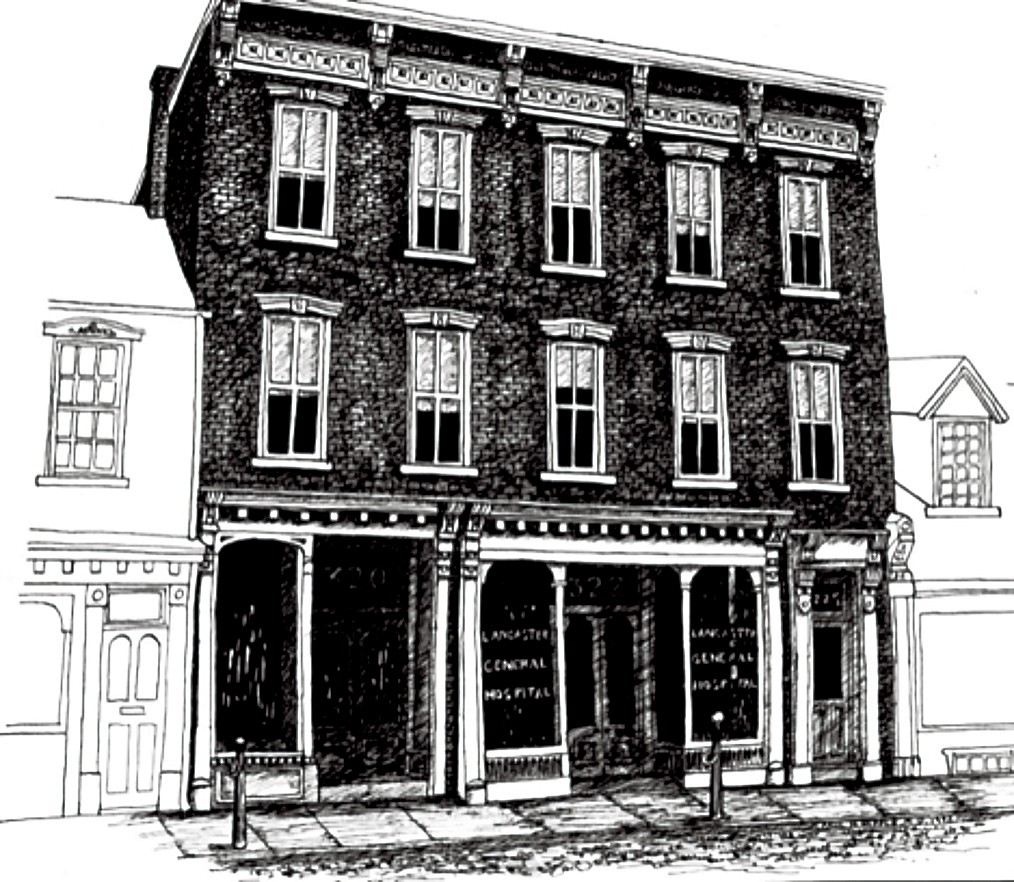 The original Lancaster General Hospital building at 322 N. Queen Street, Lancaster, as drawn by Paul Ripple, MD.
According to hospital board meeting minutes from the late 1800s, hospital admissions totaled 541 patients during the first four years. Of these, 308 were classified as surgical patients. Among the medical admissions, 105 patients were diagnosed with gastrointestinal, heart, cerebrovascular, and infectious diseases. Twenty-four died from typhoid fever, tuberculosis, endocarditis, cholelithiasis, hepatic congestion, and cerebral hemorrhage; and 16 who underwent surgery died. There were no reported cases of death from myocardial infarction or pneumonia, presumably because those so afflicted would never have made it to the hospital. The first infant was delivered at LGH on January 9, 1896.
6
Although the third Dr. John Atlee (1875-1950) was particularly active at St. Joseph’s Hospital, he also operated at LGH. Until 1915, he also reportedly continued doing a fair amount of “kitchen-table surgery” in patient homes. Many people continued to view any hospital as a place where one went only when ready to die. Despite the introduction of antisepsis and sterile techniques, most operative procedures performed in the hospital — such as incision and drainage of abscesses, repair of simple fractures, tonsillectomies, and even appendectomies — were performed by general practitioners with little or no specialized surgical training.
6
In 1912, when internship became a requirement for licensure in Pennsylvania, Lancaster General Hospital established a formal certified internship program.
6 Over the years, LGH also hosted residency programs in pathology and surgery, yet these programs were ultimately short-lived. When family medicine became a specialty in 1969, LGH replaced its general practice residency with a three-year residency in family medicine, among the first such programs in the country; to this day, this residency program continues to be well regarded.
COLUMBIA HOSPITAL
At the end of the 19th century, a group of public-spirited citizens met in the Bible School room of the Reformed Church, located at Third and Cherry Streets in Columbia. They discussed plans for the organization and opening of a hospital, established a Board of Managers, and chose to rent a mansion, once the family home of Mrs. Eleanor Righter Craig, at 115 S. Second Street. A charter was granted on March 14, 1895, and Columbia Hospital opened two months later.
Although once a prosperous and booming community during the late 19th and early 20th centuries, the city of Columbia witnessed an economic decline due to the loss of its lumber, silk, coal, iron, boat-building, and grain industries, as well as its canal and railroad facilities. Its population went from more than 12,000 people in 1900 to 10,500 by the year 2000, despite a tripling of the county’s population during the same period. And 100 years after opening, Columbia Hospital was sold in May 1995 and renamed Lancaster General Hospital — Susquehanna Division.
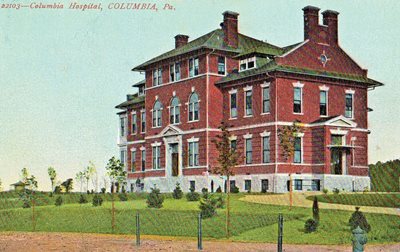 Postcard of Columbia Hospital, circa 1910. Distributed by Souvenir Postcard Co., New York, NY.
Yet the change in demographics continued to have profound consequences on the hospital’s finances, and the facility finally closed its doors in 2003.
7 At that time, the 62-bed complex at 306 N. Seventh Street was converted into a modern outpatient medical center for the citizens of Columbia that incorporated emergency medical services, primary physicians’ offices, onsite consultation services from LGH specialists, admission and business offices, medical records, and up-to-date diagnostic and imaging services.
1
LANCASTER OSTEOPATHIC HOSPITAL
In 1921, a group of osteopathic physicians and their wives campaigned to raise funds to establish their own osteopathic clinic, to be known as the A.T. Still Clinic. It began in the Woolworth Building in downtown Lancaster and later moved to 17 S. Lime Street. There, operations such as tonsillectomies and adenoidectomies were performed.
By 1929, plans had been approved to build a new three-story hospital, but its construction came to a standstill due to the Great Depression. In the meantime, Ralph P. Baker, DO, opened his own six-bed minor surgical hospital at 327 N. Duke Street. Ultimately, sufficient funds were raised to construct the Lancaster Osteopathic Hospital, which commenced operations in 1942. It was later renamed Lancaster Community Hospital.
9
EPHRATA COMMUNITY HOSPITAL
In the 1930s, a group of spiritualists calling themselves the Temple of Truth were led by Ethel Riley Post Parrish, a clairvoyant and an American spiritualist who claimed intuitive abilities to see a person’s past, present, and future. Parrish called herself a “physical medium” and desired to bring happiness to others, so she formed a church and school in Miami, Florida, to educate spiritual ministers. During one of her seances, she communicated with a Cherokee Indian guide known as Silver Belle.
In 1932, Parrish was joined by an Ephrata couple, Mr. and Mrs. John Stephan. Wanting to escape the heat of Florida summers, they chose to relocate their institute to Ephrata. In 1935, they purchased the former Mountain Springs Hotel in Ephrata and renamed it Camp Silver Belle, after Ethel’s spiritual guide. The site of the former resort was intended to host meetings, conferences, services, and vacations, and serve as a destination for spiritualists. Its mineral springs were reputed to have healing powers, attracting people from afar to manage, if not cure, their various ailments.
In 1937, the American Legion bought the property. It converted a part of the hotel into the 16-bed Stephan Memorial Hospital, which was manned by spiritualists and operated as a nonprofit institution. Two years later, it was chartered as the Ephrata Community Hospital, and the board hired a medical director and surgeon, Harold A. Mengle, MD.
10
 Postcard of Ephrata Community Hospital, circa 1930-1945. Distributed by Weit News Co., Ephrata, PA.
When World War II broke out, the greater Ephrata community had relatively few physicians, and some were called upon to join the U.S. military. Besides Mengle, the burden of care fell on others, most notably, Paul M. Riffert, MD, a dedicated surgeon, whose services were desperately needed and greatly appreciated. Ephrata’s growing population, coupled with concerns regarding the challenges the medical community had experienced during the war, led to a groundswell of support for a new hospital, which was finally built in 1949.
11 By 1961, it had achieved a 100-bed status, and in 2013, what had been the Ephrata Community Hospital became part of the WellSpan Health hospital system.
TODAY’S COMPETITIVE LANDSCAPE
With the changing times, and as a result of competing forces, St. Joseph’s Hospital closed in the year 2000. Lancaster Community Hospital, which was slated for closure, was also sold to a for-profit company and came to be known as Regional Medical Center of Lancaster. In 2004, the hospital relocated to its present location in Lititz and was renamed Heart of Lancaster Regional Medical Center. In 2017, it became part of PinnacleHealth, which ultimately became part of the University of Pittsburgh Medical Center Health System. The hospital is now known as UPMC Lititz. It offers an active graduate medical education program, with residencies in internal medicine and anesthesiology.
WellSpan Ephrata Community Hospital currently offers 141 licensed beds and serves as a clinical site for WellSpan York’s residency programs in general surgery and internal medicine.
Penn State Health Lancaster Medical Center is a 142-bed hospital that opened in October 2022. It offers advanced primary stroke care and accommodates local, independent doctors and emergency medical services. Penn State Health Lancaster also offers a residency in pharmacy and serves as a graduate medical education training site for residents and fellows.
PENN MEDICINE LANCASTER GENERAL HEALTH
In 2015, Lancaster General Hospital became part of the University of Pennsylvania Health System. Penn Medicine Lancaster General Health is the largest health system in the county, with more than 800 licensed beds in a comprehensive network of care. Including LGH with 525 beds in downtown Lancaster, the nearby Lancaster Behavioral Health Hospital with 126 beds, as well as Women & Babies Hospital with 95 beds and Lancaster Rehabilitation Hospital with 59 beds at its suburban campus just west of downtown Lancaster, LG Health serves more than 200,000 patients in Lancaster and from surrounding counties.
Penn Medicine brings to Lancaster the strength of a world-renowned, not-for-profit academic medical center. The Lancaster General Health system continues to support research and teaching, serving as an educational site for St. Joseph’s University health sciences students, as well as medical students, residents, and fellows from the Penn State College of Medicine, Philadelphia College of Osteopathic Medicine, Temple University Lewis Katz School of Medicine, and University of Pennsylvania School of Medicine, among others. With its own graduate medical education department, it continues to support its own residents and fellows training in pharmacy, family medicine, geriatrics, and sports medicine.
REFERENCES
1. Tindall HL. Colonial military hospitals. In:
A History of Medicine in Lancaster County. Lancaster City and County Medical Society; 1976:28-29,48-49.
2. Talbott P. The two hundred year history of the Lancaster County Almshouse and Hospital.
J Lanc Co Hist Soc. 2000;102(2/3):82-113.
3. Ellis F, Evans S.
History of Lancaster Pennsylvania. Everts & Peck; 1883:464.
4. Souvenir of the Golden Jubilee of St. Joseph’s Hospital, 1883-1933. St. Joseph’s Hospital; 1933:6,20.
5. Tindall HL. The Atlees: giants of Lancaster medicine. In:
A History of Medicine in Lancaster County. Lancaster City and County Medical Society; 1976:113.
6. Zervanos NJ. Lancaster General Hospital, 1893-1912.
J Lanc Co Hist Soc. 2018;119(1):3-18.
7. Stauffer C, Poist P. LGH closing hospital in Columbia June 30. LNP | Lancaster Online. Updated September 11, 2013. Accessed September 10, 2025.
https://lancasteronline.com/news/lgh-closing-hospital-in-columbia-june-30/article_2fc2b354-5140-5aba-9521-47cdb9f2df13.html
8. Lines J. History of Columbia Hospital, Lancaster General Hospital, Susquehanna Division. Dedication Service, September 15, 1996, Penn Medicine Lancaster General Health.
9. Wiley D. Chapter 11: Osteopathic medicine in Lancaster County. In:
Our Heritage. Lancaster City and County Medical Society; 1995:77-78.
10. Spohn CE. The Ephrata Mountain Springs. In: Greene JA, ed.
Volume II: The Later Years, 1882-2004, The Von Nieda Years, Camp Silver Belle and the Temple of Truth, and Ephrata’s First Hospitals. Cocalico Valley Historic Society; 2010.
11. Wissler RU. The Ephrata Community Hospital, from its founding to 1961.
J Hist Soc Cocalico Valley. 1987;12:10.