Spring 2026 - Vol. 21, No. 1
SCIENTIFIC REPORT
Addressing Pain Catastrophizing in Elective Joint Replacement Surgery


Holler Fenwick
Wendy Holler, MSN, RN, ONC, CRRN, ACNS-BC, FARN
Orthopaedic Clinical Nurse Specialist
Penn Medicine Lancaster General Health
James A. Fenwick, MD, FAAOS
Orthopaedic Surgeon, LGHP Orthopaedics
Penn Medicine Lancaster General Health
Recently, a patient admitted to Penn Medicine Lancaster General Hospital for a total knee replacement was discharged from the post-anesthesia care unit and arrived on the floor writhing in pain. Her history, including one of uncontrolled mood disorder and trauma with lingering sequelae, might have alerted the team that this patient needed a different plan of care for pain management, both preoperatively and postoperatively, but unfortunately it took several days to finally control her pain and the psychological challenges she faced.
As is common, the high levels of pain medicine resulted in negative effects, not limited to severe constipation. She finally left the hospital six days after having had surgery and was not ultimately readmitted, but her care team was left to wonder how things could have gone better.
Pain catastrophizing (PC) is a psychological experience, an overwhelming combination of exaggerated negative thought and affect when experiencing or anticipating pain; it is characterized by rumination, magnification, and helplessness.
1 It is considered an elevated risk factor for which care teams may consider cancelling or delaying surgery so that the patient can receive treatment.
2 Researchers have found that screening for PC and other mental health conditions, and addressing those problems preoperatively, can lead to significantly better outcomes for total hip arthroplasty patients.
3
BACKGROUND
The Lancaster General Hospital Orthopaedic Center utilizes clinical and best practice guidelines to drive the plan of care. The programs for hip and knee arthroplasty follow the National Association of Orthopaedic Nursing (NAON) Best Practice Guidelines.
2 The guidelines recommend screening patients for problems that may place patients at risk for poor outcomes — dental issues, sleep apnea, smoking, body mass index, anemia, hypertension, hyperglycemia, nutrition/low albumin, alcohol/drug consumption, and pain catastrophizing. Any concerns should be addressed before surgery. At the time that this project began, the LGH Orthopaedic Center screened all elective hip and knee arthroplasty patients for each of these conditions except for PC.
Recent changes in elective joint replacement surgery have been driven by a significant reduction in the expected length of hospital stay following these procedures. Twenty years ago, a typical hospital stay after a total joint replacement was around four days, with most patients spending a subsequent week in an acute rehabilitation facility. Today, half of our patients go home on the day of surgery — also known as post-op day 0 (POD 0) — with almost everyone else going home the day after surgery (POD 1).
To safely and comfortably reduce the length of stay, efforts have focused on preoperative education, perioperative surgical home preparation, and an evolution of pharmaceutical pain management techniques. At LGH and globally, these techniques have reduced length of stay, as well as improving overall patient experience, patient safety, and other patient outcomes.
Unfortunately, the pressure to reduce the duration of hospital stay has brought about unintended consequences for staff members and a subset of patients. Shorter hospital stays can amplify the anxiety experienced by patients, particularly if they are dealing with chronic pain, mental health conditions, social support issues, and any combination of these challenges.
Nursing and rehabilitation staff members find themselves with less time available to provide care while under pressure to deal with the stress and anxiety accompanied by these procedures. Relying on pharmaceutical options alone to manage pain might be counterproductive, potentially delaying care and increasing patient risk. Techniques to deal with pain and anxiety without pharmaceuticals are available but can be underutilized by staff and patients. Screening patients for PC is an attempt to address this deficiency and close the gap in addressing Best Practice Guidelines.
Total knee arthroplasty (TKA) is one of the most common surgeries with more than one million procedures performed in the United States annually; at LGH, 1,688 TKAs were performed in 2023.
4 Authors of a systematic review found that 10% of postoperative patients express dissatisfaction with their experience.
4 They also found that preoperative PC was associated with postoperative dissatisfaction. LGH uses Press Ganey scores to measure the patient experience in the health care system; however, Press Ganey scores take into consideration numerous variables. Any reference to patient satisfaction would be difficult to correlate with PC screening and use of appropriate interventions.
While there is no similar published data describing dissatisfaction in patients undergoing total hip arthroplasty (THA) (see Fig. 1), one could assume that rates are similar since chronic conditions that require joint replacement and subsequent surgical procedures are somewhat similar. Addressing PC should warrant our attention.

Fig. 1. Total hip arthroplasty.
An interdisciplinary team, the catastrophizing (CAT) team, was formed to address PC. A single-group, quality-improvement pilot project exploring the feasibility of implementing a PC risk assessment instrument and subsequent appropriate interventions for Penn Medicine Lancaster General Health Physicians (LGHP) patients undergoing THA or TKA was conducted over six months, from January 16, 2024, through July 16, 2024. This quality-improvement project was determined to pose minimal risk to patients and was an evidence-based practice implementation; it was issued an “exempt from research” status by the Penn Medicine LGH Institutional Review Board.
METHODS
All disciplines within the Orthopaedic Center received education about PC and the plan for both operationalizing screening and caring for CAT+ patients (see Fig. 2). Flyers posted on the first day of screening announced Go-Live and provided staff with an education summary as a reminder (see Fig. 3).
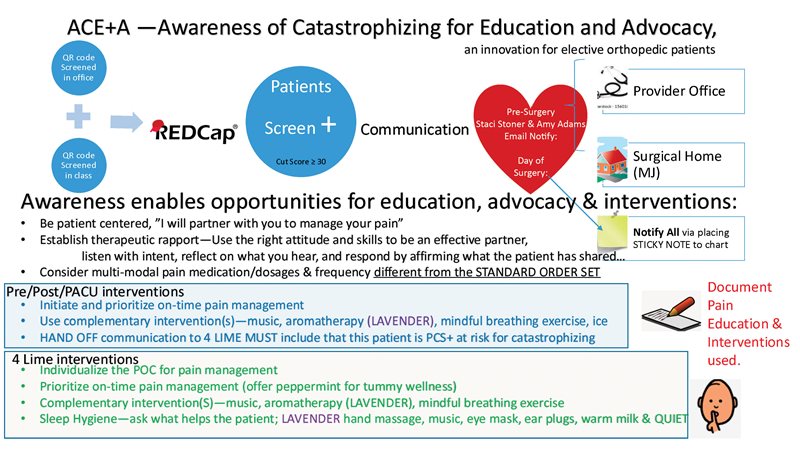
Fig. 2. ACE+A plan provided to all disciplines within the Orthopaedic Center.

Fig. 3. Flyer announcing pilot study’s Go-Live.
Screening was conducted in the LGHP outpatient surgeons’ offices. All LGHP orthopaedic joint replacement patients were provided with written educational materials related to their upcoming surgery as standard practice during their preoperative office visit. LGHP office staff provided patients with printed instructions about how to participate in a pain management survey. Participation was voluntary. The instructions directed the patient to scan a QR code to access a 13-item online survey, the Pain Catastrophizing Scale (PCS).
5 Permission to use the PCS tool was granted by the Mapi Research Trust for the purpose of data collection in this six-month pilot study.
Patients responded to each item using a 0 (not at all) to 4 (all the time) scale; a higher score was indicative of pain catastrophizing. A cut score of 20 or more was considered clinically significant.
6 For the purpose of this pilot project, patient satisfaction or dissatisfaction was not measured. The LGH REDCap survey platform was used for data collection and security.
Nurse-led interventions began with communication. Nurses on the CAT Team were alerted via an automated email from REDCap when a patient’s score was ≥20 — considered a positive screen (CAT+) — and CAT team nurses communicated the patient’s condition via email to the provider office and the perioperative surgical home, including the anesthesiology service. A new health information management (HIM) form was developed to document that the communication intervention had taken place (see Fig. 4). When the patient arrived for surgery, this form was placed into the HIM bin by nursing staff to be scanned into the patient electronic medical record (EMR). The form was made visible in the EMR under the media tab.

Fig. 4. HIM form for documenting that nurse-led communication intervention should take place.
Pain management education, another nurse-led intervention, was expected to be documented by nurses peri- and postoperatively. CAT+ patients were offered complementary interventions such as deep breathing, music listening, aromatherapy, and sleep hygiene interventions, each taught by the nursing staff. Pre-post-PACU and direct care nurses on the postoperative nursing unit at 4 Lime Street were instructed to use these interventions and document their use. In addition, the 4 Lime Street nurses were educated on good sleep hygiene. This intervention can be individualized depending on the patient and their bedtime routine.
Nurses from PACU told the 4 Lime Street nurse in the usual hand-off report if a patient was CAT+. The 4 Lime Street nurse then posted a sign (see Fig. 5) on the patient’s doorway to alert all caregivers, including the holistic therapy staff members who provide massage on the 4 Lime Street unit.

Fig. 5. Sign used on each patient’s door to alert caregivers that the patient was CAT+.
RESULTS
Although researchers estimated that about 4% to 6% of the general population pain catastrophizes, this pilot project demonstrated that the prevalence may have been much higher in the LGH perioperative community. Between January 17 and July 16, 2024, the LGHP surgeons performed 195 total knee replacements and 100 total hip replacements. Of the patients who participated in PC screening (n = 135), 20% (n = 27) were found to be CAT+.
While most CAT+ patient scores were in the twenties, seven patients scored in the low twenties (20-22); conversely, the highest seven scores ranged from 35-51. Results showed that our patients have a variety of mental health conditions (see Fig. 6) and that more than half of those who screened CAT+ took a daily medication to manage their mental health (see Fig. 7).

Fig. 6. Past medical history for psychological/behavioral health issues among patients who scored ≥20 on PCS.

Fig. 7. Participating patients taking daily medication for a mental health condition among patients who scored ≥20 on PCS.
This pilot project was limited because patients needed to be proficient in English and have access to a smartphone and an application to use a QR code from their phone. Correlation with satisfaction was not tracked.
DISCUSSION
LGHP providers were engaged. In fact, following their education and prior to the actual pilot start, one provider recognized the risk for a patient who had an extensive history of mental health challenges and substance abuse. He canceled the patient’s surgery, referred the patient for a mental health evaluation, and resumed the surgery plan after the patient was cleared to be safe.
The Orthopaedic Center offers pre-surgery education conducted by the nursing staff in one of three formats, including in person, via video, or via phone call, to prepare patients for their THA and/or TKA surgery. Program data showed that patients who participated in education using the in-person class had the best outcomes and were less likely to experience a surgical site infection postoperatively. Interestingly, we found that of those patients who screened CAT+, not one chose to attend an in-person class. Nearly all CAT+ patients used either the video or telephone education options, with only one patient not participating in any of the presurgical education options at all.
Communication to providers by the CAT team nurses was 100%. A manual review of each CAT+ patient chart demonstrated that nurses did well documenting pain management education, using most of the holistic and complementary interventions. Sleep hygiene was the one intervention not found to be documented in any of the patient records. Overall, nurses provided excellent, non-biased care.
The nurse navigator recalls speaking with the first CAT+ patient during the routine post-discharge call. She shared how amazing the nurses were. Her PCS score was high, and she suffered with bipolar disorder and had many challenging social responsibilities. When the nurses transferred her from stretcher to bed on the 4 Lime Street unit, the blankets shifted, exposing a house-arrest anklet. Embarrassed, she had apologized to the staff; yet when a nurse replied, “It’s okay; everyone deserves a second chance,” she was able to smile and relax, realizing she was in a safe place.
Almost all CAT+ patients were discharged on time. Only one patient had an extended length of stay due to pain. A different CAT+ patient returned to the Emergency Department within seven days of discharge for pain management. A review of this patient’s electronic medical record revealed that his return was due to unforeseen social challenges.
CONCLUSION
This work was planned with and followed by the orthopaedic care management (OCM) team. Bi-monthly updates were provided to OCM over almost three years. Study results were shared. As a result, other local orthopaedic surgical practices in Lancaster are interested in implementing PCS screening, while the LGHP practice plans to continue screening their patients. The literature demonstrates that screening for PC could benefit other surgical populations such as patients who utilize spine, cardiothoracic, gastrointestinal/genitourinary, and OB-GYN services.
Next steps are to obtain licensing for use of the PCS tool. From the pilot data and experience, it is recommended that screening be expanded to all languages and that screening become a mandatory part of the assessment for all patients prior to surgery. In the Orthopaedic Center, to support the best chance of good outcomes, it has been recommended that any patient who scores ≥20 on the PCS attend an in-person class prior to surgery.7
ACKNOWLEDGEMENTS
The authors graciously thank:
- Christian N. Burchill, PhD, MSN, RN, CEN, associate chief nursing officer for research, evidence-based practice, and innovation at the University of Pennsylvania Health System, and director of nursing research and evidence-based practice at LG Health, for guiding this work.
- The CAT Team nurses whose participation was instrumental in the success of the project, including Amy Adams, BSN, RN; Lisa Graham, BSN, RN; Staci Stoner, BSN, RN, CPAN; and Wendy Holler, MSN, RN, ONC, CRRN, ACNS-BC, FARN.
- The National Association of Orthopaedic Nurses Foundation for their financial support to this scholarly project.
REFERENCES
1. Hardy A, Sandiford MH, Menigaux C, Bauer T, Klouche S, Hardy P. Pain catastrophizing and pre-operative psychological state are predictive of chronic pain after joint arthroplasty of the hip, knee or shoulder: results of a prospective, comparative study at one year follow-up.
Int Orthop. 2022;46(11):2461-2469.
2. Best Practice Guideline for Total Hip Replacement. National Association of Orthopaedic Nurses; 2018.
3. Reine S, Xi Y, Archer H, Chhabra A, Huo M, Wells J. Effects of depression, anxiety, and pain catastrophizing on total hip arthroplasty patient activity level.
J Arthroplasty. 2023;38(6):1110-1114.
4. DeFrance MJ, Scuderi GR. Are 20% of patients actually dissatisfied following total knee arthroplasty? A systematic review of the literature.
J Arthroplasty. 2023;38(3):594-599.
5. Sullivan MJL, Bishop SR, Pivik J. The Pain Catastrophizing Scale: development and validation.
Psychol Assess. 1995;7(4):524.
6. Hasegawa M, Tone S, Naito Y, Sudo A. Preoperative pain catastrophizing affects pain outcome after total knee arthroplasty.
J Orthop Sci. 2022;27(5):1096-1099.
7. Gibson E, Sabo MT. Can pain catastrophizing be changed in surgical patients? A scoping review.
Can J Surg. 2018;61(5):311-318.