Fall 2026 - Vol. 21, No. 3
CLINICAL REPORT
Student Absenteeism
How Health Care Providers Can Partner with Schools
Chair of Pediatrics, Lancaster General Hospital; Physician, Pediatric Headache Program, CHOP
Jeffery Martin, MD, FAAFP
Chair of Family and Community Medicine, Penn Medicine Lancaster General Health
Titina Brown, PsyD
Program Director, Early Childhood and Special Education Services, Lancaster-Lebanon Intermediate Unit 13
Caitlin F. Bennyhoff, DEd, NCSP
School Psychologist — ATTEND Program, Lancaster-Lebanon Intermediate Unit 13
Karen Brodeur
Tier 3 Math Interventionist Grades 6,7, and 8, Cumberland, Rhode Island
Danielle Ford, LSW, ACSW
Social Worker, Pediatric Headache Program, CHOP
Christina Murphy, PhD
Psychologist, Pediatric Headache Program, CHOP
Virginia Bramley
High School Counselor, Red Land School District
Carlyn Patterson, MD, PhD
Fellowship Director, Pediatric Headache Program, CHOP
School absences are often more than a missed day of learning. By the time students get to middle school, it is very difficult to replace the time missed in the elementary learning environment. Chronic absenteeism has been linked to academic struggles, social-emotional issues, and long-term health disparities.
1 The causes of chronic absenteeism are often multifactorial and can include child-specific issues including chronic illness, parenting-specific challenges including economic barriers, and school-specific challenges including a lack of perceived protections. The School Refusal Assessment Scale — Revised, as well as screening tools to identify social barriers to health, may help the family and care team identify what needs to be addressed.
With regard to chronic illness, there should be clear expectations about school attendance and collaboration on the part of the health care team and family with school personnel. Cognitive behavioral therapy is often as helpful as pharmacotherapy to treat anxiety. Regarding school-specific challenges, clinicians should assess for bullying at school and whether there are any other potential safety concerns. Bright Futures questionnaires and an inventory of the home and environment, education and employment, eating and exercise, activities, drugs/substances, sexuality, suicide/depression, safety — otherwise known as the HEEDSSS psychosocial inventory — can be useful screening tools. Health care clinicians are in a unique position to identify patterns, support families, and collaborate with schools to reduce student absences, particularly those driven by chronic illness and/or family challenges.
CASE EXAMPLE
A 14-year-old female with a history of migraine headaches, anxiety, and depression presents to the primary care office in early November because she has an upper respiratory infection without fever and headache. She has missed the last few days of school, and her mother asks for a medical excuse for the days missed. The school has been requesting a medical excuse for every absence. The mother indicates that her daughter has missed eight days of school so far this year for various reasons.
This patient was recently referred to a headache program; her appointment is in a few weeks. She received counseling for anxiety in the past but indicates it was not helpful. She is otherwise healthy. Her parents are divorced and share custody. She is in ninth grade and used to play soccer but no longer participates in any extracurricular activities.
Regarding her history of headaches, the patient reports she experiences about one per week and describes migraine features but denies they cause vomiting. Headaches usually occur later in the day and are often relieved by rest or ibuprofen; however, she indicates the headaches are getting worse and interfere with her ability to accomplish activities. About half of her absences this school year have been headache-related.
Both the mother and patient indicate that the patient’s anxiety seems to be the most prominent and troublesome symptom for her. She has a difficult time sleeping at night because her mind is filled with thoughts, and she subsequently oversleeps, resulting in being late for school or staying home. Her mother has tried to awaken the patient and take her to school. When she is with her father, however, she is allowed to sleep in and seems to miss more school days while in his care.
The patient indicates that she does not enjoy school very much but is interested in attending college. The mother indicates that her daughter endured bullying in sixth grade, but it has stopped. The individuals who did the bullying remain at the same school and in her grade. Most of the office visit is spent discussing her school attendance and anxiety.
Along with supportive care regarding her upper respiratory symptoms, she is provided a referral to counseling for the anxiety. She is encouraged to keep the appointment with the headache program. Detailed school excuses are given for the recent missed days of school, indicating she could return to school tomorrow without restrictions. The primary care clinician has the mother sign a consent form allowing communication with the school while providing the family with information about the link between school absenteeism, school performance, and future wellness.
The mother is given helpful information, including a
link to family education materials regarding absences.
EPIDEMIOLOGY AND DEFINITIONS
Chronic absenteeism is defined as missing 10% or more of school days, regardless of reason, whereas truancy refers to willful absenteeism for which an absence is unexcused
2,3 (see Fig. 1).
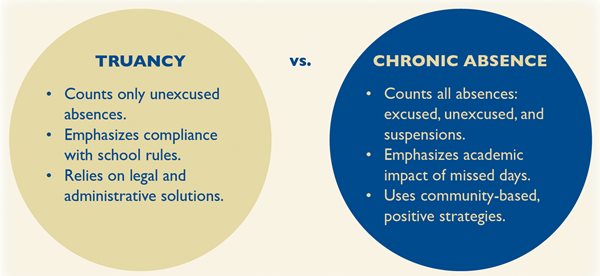 Fig. 1. Truancy versus chronic absenteeism. Adapted from Attendance Works.3
A subset of chronically absent students is absent due to symptoms of anxiety, resulting in significant difficulty functioning relative to their given developmental level.
4 These students may be referred to as experiencing “school refusal” or “school avoidance” and may require different interventions than students who are truant.
Regardless of reason for absences, utilizing a 10% absences threshold can allow for identification and intervention for students with poor attendance.
3 Attendance habits established in September appear to persist over the whole year.
5 Students who in September missed fewer than two days continue to average fewer than two days absent each month over the year.
5
Federal data show a chronic absenteeism rate of 28% during the 2022-2023 school year, a significant change from the rate of 14.8% recorded during the 2018-2019 school year.
6 Nationally, rates for males and females are similar, although the reasons for being absent may differ.
6 In Pennsylvania, compulsory school attendance laws require children aged 6-18 years to attend school regularly.
7
Being truant is defined as three or more unexcused absences, while six or more unexcused absences is designated as “habitually truant.”
7 Schools must notify parents in writing after three unexcused absences, and a school attendance improvement plan meeting is required for students with habitual truancy. Illness, family emergencies, funerals, and religious observances are valid reasons and can account for excused absences. A clinician’s note may be required after multiple illness-related absences.
7
THE NEGATIVE IMPACT OF CHRONIC ABSENTEEISM
School attendance issues have been shown to be related to long- and short-term negative outcomes.
8 School absenteeism can affect student performances in the short term which can influence social, economic, and health outcomes in the long term.
9 These negative outcomes are noted regardless of whether the absences are excused or unexcused.
2
Children and adolescents who frequently miss school for any reason are at risk for future chronic absenteeism, grade retention, and low academic achievement, particularly in the domains of social skills development and reading.
10,11 Chronic absenteeism can be a better predictor of school failure than test scores.
2 Students with high test scores who miss at least two weeks of school during the semester are more likely to have failing grades than students with low test scores who regularly attend school.
12 Chronic absenteeism correlates with a risk of dropping out of school.
13
Students with frequent school absences are at increased risk of engaging in health-risk behaviors, such as using tobacco, alcohol, and other drugs, as well as engaging in risky sexual behaviors.
14 Suicide attempts, unintentional injury, and violence are all associated with chronic absenteeism,
15 as is teenage pregnancy, which is the leading cause of school dropout for adolescent females.
16 Students with chronic absenteeism are also more likely to engage in criminal behavior.
17
CAUSES OF SCHOOL ABSENTEEISM
The reasons students are absent from school can be divided into three broad categories, but school absenteeism is often multifactorial
18,19:
- Students may have illness, family responsibilities, housing instability, the need to work, or involvement with the juvenile justice system.
- The environment may present the student with risks associated with bullying, unsafe conditions, harassment, and embarrassment.
- The students and/or their parents may not see the value of school, may have something else they would rather do, or may harbor the belief that nothing can stop them from skipping school.
An instrument such as the School Refusal Assessment Scale — Revised, which includes both parent and child rating forms, can assist with determining why a student may be staying home from school.
20 Screening for social determinants of health with tools such as the Accountable Health Communities Health-Related Social Needs Screening Tool may help identify barriers. Interventions should then focus on those reasons that have been identified.
Health Conditions and Social Challenges
Occasional absences related to health conditions, such as a viral infection, can be expected, but absences due to chronic health conditions can quickly add up.
2 For a student with a chronic health condition that is not adequately managed, the risks of developing chronic absenteeism increase.
Behavioral Health Disorders
School absenteeism has been associated with behavioral health disorders.
21 Absences due to anxiety may be increased by one or more of the following
18,19,21,22:
- A desire to avoid stimuli that provoke a negative affect.
- A need to escape aversive social or evaluative conditions.
- A hope to pursue attention from important caregivers.
- An obligation to pursue tangible reinforcement outside of the school setting.
Yet missing school may exacerbate anxiety. When schoolwork is missed and overdue responsibilities mount, students may become overwhelmed and feel unable to catch up, further fueling anxiety and school avoidance.
Conduct disorders and depressive symptoms can lead to frequent school absences, and frequent absences can also lead to conduct disorders and depressive symptoms.
23 Additionally, students may feel unsafe, either because they are bullied or have a history of being bullied, or may identify with a socially vulnerable group.
18
Parenting and Family Challenges
Parenting problems, including parental depression, are associated with an increase in school absences in their children.
24 Family discord, including witnessing domestic violence, can also lead to increased school absenteeism.
25 Students living in poverty as compared to those from higher-income families are more likely to be absent from school,
26 and unstable housing and transportation challenges can lead to reduced school attendance.
27 Again, it may be worthwhile for the primary care team to explore social barriers that can exacerbate attendance problems. Screening tools for the social determinants of health may help identify opportunities for interventions. The Accountable Health Communities Health-Related Social Needs Screening Tool is one of many validated tools to help clinicians assess such barriers.
SCHOOL INTERVENTIONS TO IMPROVE ATTENDANCE
School-based interventions to improve attendance can be most effective when they are organized within a tiered framework and adapted to the specific needs of each student, family, and school. One widely used framework is the Multi-Tiered Systems of Support (MTSS), which integrates academic, behavioral, and social-emotional supports to promote student success (see Fig. 2).
28
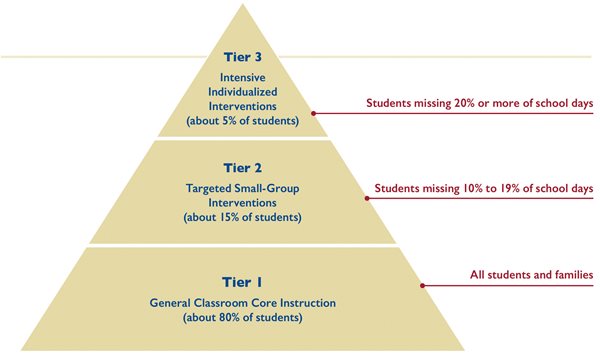 Fig. 2. Multi-Tiered Systems of Support with absence rates. Adapted from American Institutes for Research28 and Attendance Works.29
The MTSS framework has several essential components: screening, progress-monitoring, multi-level prevention and intervention systems, and data-based decision-making.
Tier 1
At the Tier 1 level, schools typically focus on universal practices to help all students maximize daily attendance. This includes clear school-wide expectations, consistent routines, and instruction that encourages students to come to school regularly.
Tier 1 supports aim to prevent attendance problems before they develop by creating a welcoming environment where students feel connected and motivated to attend school regularly. Tier 1 interventions are meant to raise awareness regarding the positive outcomes attendance has on academic achievement and student well-being.
29
Family and community engagement are also key components, so schools should provide regular communication, culturally responsive outreach, and accessible resources to support attendance.
When many students experience high levels of chronic absence, it often signals a need for a stronger investment in
Tier 1 supports. This could mean the school needs to evaluate any barriers that could limit these aspects.
Tier 2
Tier 2 interventions are designed for students who begin to show patterns of absenteeism — those students who have missed between 10% to 19% of school days — and often involve more targeted support, including regular check-ins with a trusted adult, small-group mentoring, or increased communication directed toward the families to identify and reduce barriers to attendance.
Common Tier 2 support includes regular check-ins with a trusted adult to build accountability and connection. As patterns often continue, it is suggested to provide Tier 2 support to students who missed 10% or more of school from the previous year in the beginning of the year to promote proactive measures for the upcoming school year.
Tier 3
Tier 3 interventions provide individualized and intensive support for students with chronic or severe attendance concerns, which equates to an absence rate of 20% or more. This may include personalized attendance plans, as well as collaboration with community agencies, counseling services, or other support tailored to the students’ needs.
Because each school has unique resources, student populations, and community challenges, these interventions can look different from one setting to another. Tier 3 supports aim to re-engage students who are substantially disconnected from school.
29
OFFICE-BASED RECOMMENDATIONS
In its policy statement, “The Link Between School Attendance and Good Health,” the American Academy of Pediatrics provides recommendations for office-based interventions addressing school attendance.
2 For all patients, clinicians should:
- Routinely ask at preventive care visits and sick visits about the number of absences a student has experienced.
- Educate parents and patients about the effects of school absences on school performance and future wellness.
- Support parents in addressing barriers to attendance.
- Ask families of children with chronic health issues, such as asthma, allergies, migraines, and seizures, if they have an action plan at school.
- Assist families in documenting and interpreting their children’s medical needs or disability for an Individualized Education Program or 504 plan.
- Provide firm guidance regarding when a child should stay home if sick and how to avoid absences due to minor illness or anxiety.
- Routinely ask whether patients have experienced out-of-school suspension or expulsion so they may assist patients and families who are affected by these.
For patients that are missing two or three days of school per month, clinicians should:
- Prevent, identify, and treat physical and mental health conditions that are contributing to school absences.
- When possible, identify psychosocial risk factors and health factors among a patient’s caregivers that may be contributing to the patient’s school absenteeism, and refer the caregiver to appropriate resources in the community.
- Avoid writing excuses for school absences when the absence was not appropriate, and avoid backdating to justify absences.
- Strongly encourage patients who are well enough to attend school to return to school immediately after their medical appointments, so they do not miss the entire day.
- Avoid contributing to school absences. Consider offering extended office hours and encouraging families to make preventive care and follow-up appointments for times outside of regular school hours.
- After parental consent, communicate and collaborate with school professionals and community partners to manage the health conditions of patients with chronic absenteeism.
- Encourage parents of students with excessive absences to try arranging a formal school team meeting to discuss how the school and family can collaborate.
For patients that are missing four or more days of school per month (approximately 15% of total school time), clinicians should:
- Encourage the school or district to provide services such as intensive case management and mentorship.
- Communicate and collaborate with professionals providing support services in school, and serve as a patient’s advocate and medical expert.
COGNITIVE BEHAVIORAL THERAPY
Many children struggling with school absenteeism have unhelpful thoughts. These negative thoughts often lead to missed days of school. For example, children with chronic migraine might worry about getting a headache while at school, or those that have been bullied in the past may feel unsafe at school. For those that struggle, cognitive behavioral therapy (CBT) may help. It is the most extensively studied and widely implemented evidence-based approach for addressing school absenteeism and plays a role in well-established programs such as When Children Refuse School.30,31
CBT targets absenteeism by helping students identify and reframe unhelpful thoughts, build strategies for managing anxiety, and gradually re-engage in school settings through exposure therapy. The purpose is to interrupt patterns of avoidance and build skills for managing emotions and situations related to school. Assessing the underlying factors in anxiety-based school avoidance is key to treatment planning.32
The efficacy of CBT-based approaches is supported by multiple systematic reviews. Two reviews of primarily CBT-based interventions targeting school refusal and truancy demonstrated improved school attendance.20,33 More recently, a systematic review of interventions to reduce school attendance problems identified 29 programs with evidence of effectiveness, 23 of which were CBT based.34
A defining feature of successful CBT-based interventions is coordinated care across the student’s social ecology, particularly between home and school.35 Communication between treating clinicians, school personnel, mental health providers, and the family is key to addressing antecedent conditions; scaffolding school experiences so that exposure is gradual can provide opportunities to celebrate treatment success.
PREVENTION
There is some evidence that simply letting parents know that attendance is tied to academic success can help reduce absences.18 For example, some kindergartens have improved attendance rates by sending families postcards that highlight this connection and show the number of days each child has already missed.36
Clinicians can reinforce the message of attendance and academic success in small but meaningful ways. Materials in the waiting room or conversations during pre-K well-child visits can help parents understand early on that consistent school attendance improves long-term academic outcomes.
There’s also strong evidence supporting early childhood programs. A longitudinal study following more than 14,000 children found that, even after accounting for socioeconomic factors, kids who attended center-based pre-K — that is, programs that are not based in a private home — were less likely to be chronically absent the next year.37 Pre-K gives families a chance to ease into school routines and expectations, which can pay off later.
Clinicians can encourage families, especially those with risk factors for chronic absenteeism, to consider center-based preschool. These programs don’t just support attendance; they also help identify developmental or behavioral concerns early, before they contribute to future absenteeism.38
SOCIAL WORK AND FAMILY SUPPORT
Social work interventions with children and caregivers focus on building skills in emotional regulation, coping, communication, problem-solving, and safe discipline. The goals are aimed at improving child well-being, strengthening family relationships, enhancing safety, reducing conflict, and promoting stable and secure home environments.39
Social workers can help students, families, and school staff identify and address barriers. They can help students face challenging mental health concerns, medical concerns, or family problems, providing interventions to support academic and social success.39
Social workers also use a range of strategies, including advocacy, counseling, collaboration with community resources, school accommodations, team meetings, gradual re-entry plans, personalized attendance plans, and referrals to educational advocates — the most commonly used are the Parent Education and Advocacy Leadership Center and the Statewide Parent Advocacy Network.39
Early intervention helps prevent long-term negative outcomes, keeps students academically on track, and promotes overall well-being.
A treatment strategy sometimes used by social workers and therapists to support families is Alternatives for Families: A Cognitive Behavioral Therapy. This trauma-informed, evidence-based family treatment supports children aged 5-17 years and their caregivers who have experienced family conflict, coercive parenting, physical discipline, abuse, or related behavior problems. It focuses on improving caregiver-child relationships, reducing the effects of trauma including post-traumatic stress disorder, and lowering the risk of ongoing conflict or aggression.40
CASE DISCUSSION
Regarding the patient presented earlier who is missing three to four days of school per month, her absenteeism necessitates a Tier 2 level of intervention. Without intervention, this pattern of absenteeism will most likely continue.
The primary care physician has already started some treatment strategies that should help. The patient has an appointment with the headache program to assist with headache treatment, and a referral has been made for counseling. A detailed note is provided with the expectation that she can return to school the following day without restrictions. The office also obtains consent from the mother for the office to be able to communicate with the school.
The mother indicates a note will be needed for any absences in the future, evidence that the school has started to intervene as well. The school counselor is now meeting with the student on a regular basis to implement self-regulation strategies at school.
At the appointment with the headache program, an extensive assessment of school absenteeism is conducted. Additional treatments are starting to control the headaches, and a school treatment plan is put in place to help the child while at school.
Because she is struggling with severe anxiety, counseling and possibly medication are recommended. The patient’s mother indicates an appointment is scheduled for next month with a psychologist to start CBT, and the patient indicates that meeting with the school counselor has been helpful. The patient’s mother schedules a follow-up appointment with the primary care clinician in a month to discuss the anxiety. At that time, a selective serotonin reuptake inhibitor (SSRI) is started.
In addition, the social worker for the headache program contacts the father and reviews the school absenteeism with him. He reveals to her that he has been struggling with depression, and she provides some community resources. The social worker reaches out to the school counselor and provides an update.
During follow-up with the headache program three months later, it is noted her headaches are improved and she is sleeping better. The headache plan at school is being followed, and she is able to go to the school nurse when she develops a headache. She has only missed one day of school over the past month due to a migraine.
During a follow-up appointment with the primary care team two months later, she indicates her anxiety has improved. CBT has helped her with negative thoughts regarding bullying, and her father has made efforts to help her in the mornings. Importantly, she has not missed any school over the past month.
CONCLUSION
School absenteeism is a common problem and can have negative consequences for the students and families involved. Causes are often multifactorial and include individual, family, school, and community variables.
With early intervention and collaboration, the health care team and school personnel can make a positive impact on attendance and future success.
REFERENCES
1. Ulaş S, Seçer I. A systematic review of school refusal. Curr Psychol. 2024;43:19407-19422.
2. Allison MA, Attisha E; Council on School Health. The link between school attendance and good health. Pediatrics. 2019;143(2):e20183648.
3. Chronic Absence: The Problem. Attendance Works. Accessed January 4, 2026. https://www.attendanceworks.org/chronic-absence/the-problem/
4. Albano AM, Puliafico AC. A systemic, evidence-based approach to addressing school avoidance [video]. Columbia Psychiatry YouTube page. January 10, 2024. Accessed January 17, 2026. https://youtu.be/LcvDyBgkip4
5. Olson LS. Why September matters: improving student attendance. Baltimore Education Resource Consortium. July 2014. Accessed January 4, 2026. https://baltimore-berc.org/wp-content/uploads/2014/08/SeptemberAttendanceBriefJuly2014.pdf
6. Chronic Absenteeism. Department of Education. Updated August 21, 2025. Accessed January 17, 2026. https://www.ed.gov/teaching-and-administration/supporting-students/chronic-absenteeism
7. PA Department of Education. Compulsory School Attendance, Unlawful Absences, School Attendance Improvement Conferences. 2006. 24 P.S. 13-1326-1354. Updated January 2024. Accessed January 11, 2026. https://www.pa.gov/agencies/education/resources/policies-acts-and-laws/basic-education-circulars-becs/purdons-statutes/compulsory-school-attendance-unlawful-absences-and-school-attendance-improvement-conferences
8. Ulaş S, Gonzálvez C, Seçer I. School refusal: mapping the literature by bibliometric analysis. Front Psychol. 2024;15:1265781.
9. Ansari A, Hofkens TL, Pianta RC. Absenteeism in the first decade of education forecasts civic engagement and educational and socioeconomic prospects in young adulthood. J Youth Adolesc. 2020;49(9):1835-1848.
10. Chang HN, Romero M. Present, engaged and accounted for: the critical importance of addressing chronic absence in the early grades. National Center for Children in Poverty. 2008. Accessed August 7, 2026. https://www.nccp.org/wp-content/uploads/2008/09/text_837.pdf
11. Bruner C, Discher A, Chang H. Chronic elementary absenteeism: a problem hidden in plain sight. Attendance Works. November 2011. Accessed January 11, 2026. https://www.attendanceworks.org/wp-content/uploads/2017/04/Chronic-Elementary-Absenteeism-A-Problem-Hidden-in-Plain-Sight.pdf
12. Allensworth E, Easton JQ. What matters for staying on-track and graduating in Chicago public high schools. UChicago Consortium on School Research. July 2007. Accessed January 11, 2026. https://consortium.uchicago.edu/publications/what-matters-staying-track-and-graduating-chicago-public-schools
13. Ginsburg A, Chang H, Jordan P. Absences add up: how school attendance influences student success. August 2014. Accessed January 11, 2026. https://www.attendanceworks.org/absences-add-up/
14. Eaton DK, Brener N, Kann LK. Associations of health risk behaviors with school absenteeism. Does having permission for the absence make a difference? J Sch Health. 2008;78(4):223-229.
15. Gottfried M. Chronic absenteeism and its effects on students’ academic and socioemotional outcomes. J Educ Stud Placed Risk. 2014;19(2):53-75.
16. Freudenberg N, Ruglis J. Reframing school dropout as a public health issue. Prev Chronic Dis. 2007;4(4):A107.
17. Robertson AA, Walker CS. Predictors of justice system involvement: maltreatment and education. Child Abuse Negl. 2018;76:408-415.
18. Allen CW, Diamond-Myrsten S, Rollins LK. School absenteeism in children and adolescents. Am Fam Physician. 2018;98(12):738-744.
19. Balfanz R, Byrnes V. The importance of being in school: a report on absenteeism in the nation’s public schools. Ed Dig: Essential Readings Condensed for Quick Review. 2012;78(2):4-9.
20. Maynard BR, McCrea KT, Pigott TD, Kelly MS. Indicated truancy nterventions for chronic truant students: a Campbell systematic review. Res Soc Work Pract. 2013;23(1):5-21.
21. Rogers MA, Klan A, Oram R, et al. School absenteeism and child mental health: a mixed-methods study of internalizing and externalizing symptoms. School Ment Health. 2024;16:331-342.
22. Kearney CA, Silverman WK. Functionally based prescriptive and nonprescriptive treatment for children and adolescents with school refusal behavior. Behav Ther. 1999;30:673-695.
23. Wood JJ, Lynne-Landsman SD, Langer DA, et al. School attendance problems and youth psychopathology: structural cross-lagged regression models in three longitudinal data sets. Child Dev. 2012;83(1):351-366.
24. Claessens A, Engel M, Curran FC. The effects of maternal depression on child outcomes during the first years of formal schooling. Early Child Res Q. 2015;32:80-93.
25. Romano E, Babchishin L, Marquis R, Fréchette S. Childhood maltreatment and educational outcomes. Trauma Violence Abuse. 2015;16(4):418-437.
26. Carlson JA, Mignano AM, Norman GJ, et al. Socioeconomic disparities in elementary school practices and children's physical activity during school. Am J Health Promot. 2014;28(3 Suppl):S47-S53.
27. Rafferty Y. The legal rights and educational problems of homeless children and youth. Educ Eval Policy Anal. 1995;17(1):39-61.
28. American Institutes for Research. Essential components of MTSS. MTSS4Success. Accessed January 10, 2026. https://mtss4success.org/essential-components
29. Chronic Absence: What Activates Support at Each of the 3 Tiers? Attendance Works. Updated September 2022. Accessed August 7, 2026. https://www.attendanceworks.org/chronic-absence/addressing-chronic-absence/what-activates-support-at-each-of-the-3-tiers
30. Heyne D, Sauter FM, Ollendick TH, Van Widenfelt BM, Westenberg PM. Developmentally sensitive cognitive behavioral therapy for adolescent school refusal: rationale and case illustration. Clin Child Fam Psychol Rev. 2014;17(2):191-215.
31. Kearney CA, Albano AM. When Children Refuse School: A Cognitive-Behavioral Therapy Approach: Therapist Guide. 2nd ed. Oxford University Press; 2007.
32. Kearney CA. Identifying the function of school refusal behavior: a revision of the School Refusal Assessment Scale. J Psych Beh Assess. 2002;24(4):235-245.
33. Maynard BR, Heyne D, Brendel KE, Bulanda JJ, Thompson AM, Pigott TD. Treatment for school refusal among children and adolescents: a systematic review and meta-analysis. Res Soc Work Pract. 2018;28(1):56-67.
34. Pérez-Marco M, Gonzálvez C, Fuster A, Vicent M. A systematic review of intervention programs for school attendance problems. Child Youth Serv Rev. 2025;169:108091.
35. Kearney CA, Graczyk PA. A multidimensional, multi-tiered system of supports model to promote school attendance and address school absenteeism. Clin Child Fam Psychol Rev. 2020;23(3):316-337.
36. Robinson CD, Lee MG, Dearing E, Rogers T. Reducing student absenteeism in the early grades by targeting parental beliefs. Am Ed Res J. 2018;55(6):1163-1192.
37. Gottfried MA. Can center-based childcare reduce the odds of early chronic absenteeism? Early Child Res Q. 2015;32:160-173.
38. Korematsu S, Takano T, Izumi T. Pre-school development and behavior screening with a consecutive support programs for 5-year-olds reduces the rate of school refusal. Brain Dev. 2016;38(4):373-376.
39. How School Social Workers Address Attendance Issues. American Profession Guide. Accessed February 13, 2026. https://americanprofessionguide.com/how-school-social-workers-address-attendance-issues/
40. Alternatives for Families: A Cognitive Behavioral Therapy (AF-CBT): At a Glance. National Child Traumatic Stress Network. Updated May 6, 2026. Accessed August 7, 2026. https://www.nctsn.org/sites/default/files/interventions/AF-CBT_050626.pdf