Fall 2026 - Vol. 21, No. 3
MEDICAL HISTORY
The Medical Families of Lancaster County
Nikitas J. Zervanos, MD
Director Emeritus, Department of Family and Community Medicine
Director Emeritus, Family Medicine Residency Program, 1969-2002
Lancaster General Hospital
Editor’s note: This series of articles by Dr. Zervanos focuses on the circumstances, institutions, and people who built the medical community now recognized as Penn Medicine Lancaster General Health. Much of the information comes from manuscripts he authored and donated to the American Academy of Family Physicians Foundation. This installment discusses the medical families of Lancaster County.
THE NEFFS
The first physician to establish his practice in Lancaster County was Dr. Hans Heinrich Neff, a Swiss Mennonite, who arrived with his brother, Francis, sometime before 1715. The brothers were among a group of Mennonites who had endured religious persecution in Switzerland and left their homeland in the early 18th century to take up residence in Alsace, France, before immigrating to the British American colony of Pennsylvania.
Dr. Neff bought land from William Penn along the Conestoga River; the land came to be called Hardwicke. When boundaries were established in 1729, the border for Manheim Township was drawn along his property line, which was described as “the Old Doctor’s Ford.”
1 He settled near the stream that came to be known as Neff’s Run, which emptied into the west branch of the Little Conestoga River.
Many of Dr. Neff’s descendants became apprenticed as physicians, including his sons, Abraham and Christian, and two nephews, Dr. Abraham Brenneman, who also operated a drug store, and Dr. John Neff, known as the “water doctor.” The therapeutic use of water — hydrotherapy, as it came to be known — included the various ways to administer hot and cold water to manage fever and other manifestations of illness.
THE ATLEES
Among the most prominent physicians in Lancaster County were the Atlees. The first of the Atlees to come to the Americas was William (1696-1744), from Middlesex, England. He arrived in 1733 to serve as the secretary to the governor of Barbados. He immigrated to Philadelphia with his wife Jane Alcock Atlee. After he died in 1744, she settled in Lancaster with one of her sons, the Honorable William Augustus Atlee (1735-1793).
2
One of William Augustus’s and his wife Esther’s sons, Edwin (1776-1852), was the first Dr. Atlee. He studied and apprenticed under General Edward Hand, MD, cofounder of Lancaster County’s first hospital. Edwin graduated from the University of Pennsylvania in 1804 and settled in Philadelphia, where he became known for his skills in obstetrics. Dr. Atlee was also a gifted musician and writer.
3
Beginning with William’s great-grandson and Edwin’s nephew, there were five generations of doctors with the name John Light Atlee. The first, born in 1799, was followed by a succession of Johns, respectively born in 1830, 1875, 1903, and 1933. The father of the third Dr. John L. Atlee, born in 1875, was not a physician but rather John’s (1830) brother, William Atlee, Esq., a lawyer.
The third and fourth Dr. John L. Atlees played a decisive role in the development of surgery at St. Joseph’s Hospital, where they also established a residency program in surgery. The fourth Dr. John L. Atlee also had a brother William, who became a surgeon. The fifth Dr. John L. Atlee, born in 1933, was a professor of anesthesiology in the School of Medicine at the University of Wisconsin-Madison.
The most famous Dr. Atlee was the first John L. Atlee, MD (1799-1885). He left an indelible mark on Lancaster County medicine. He and his brother, Washington Lemuel Atlee, MD (1808-1878), became well known for their surgical skills. They became nationally and internationally renowned for developing the operative technique for the relatively safe removal of ovarian tumors. The brothers performed the first such operation in 1843 in the patient’s home on her dining room table, using opium for analgesia; despite not using antiseptics, the patient recovered without complications.
Dr. John Atlee is credited with performing 78 ovariotomies — and 62 of these patients had complete recovery, a notable success rate for the pre-antiseptic era — while his brother performed nearly 400 operations.
4 Although the doctors were never harmed or persecuted, both were threatened with arrest for performing such a high-risk operation, and Dr. Washington Atlee was branded as “a dangerous man, even a murderer.” Facing such criticism, the brothers demonstrated courage and self-confidence, saving many lives.
3
Both brothers played prominent roles in local medical politics, promoting higher standards of medical practice. Dr. John Atlee became president of the Lancaster City & County Medical Society and the Pennsylvania Medical Society, and in 1882, at the age of 83, the president of the American Medical Association, the same year the
Journal of the American Medical Association (JAMA) was founded.
3 He also played a prominent role in the history of the Almshouse, known as the Lancaster County Hospital; in public health as a member of the Sanitary Committee; and in mentoring medical students through apprenticeships and externships.
During the 1854 cholera epidemic, in his role as attending physician of the Lancaster Almshouse and Hospital, the first Dr. Atlee ordered the cleaning and whitewashing of the buildings from attic to basement, the removal of all dead matter, the cleaning of the sewers, and the treatment of the outhouses with lime. He treated cholera patients by prescribing copious amounts of cold water, quinine, and opium. He accepted the theory that cholera was caused by contagion and observed correctly that the disease was spread by contact with a “specific poison” from the excreta of the sick, predating the 1884 identification by German microbiologist Robert Koch that the source of so many tragic deaths is the bacterium
vibrio cholera.5
In 1878, in recognition of Dr. Atlee’s teaching of anatomy and physiology, he was awarded an honorary doctorate at Franklin & Marshall College.
3 The photo below shows Dr. Atlee surrounded by five of his students, circa the late 1850s.
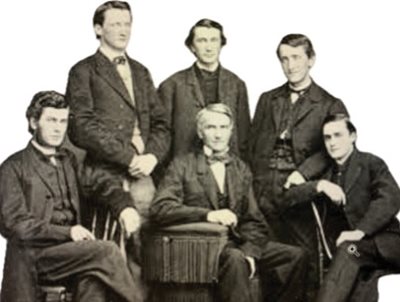
Dr. Atlee’s son, the second Dr. John L. Atlee, served as an “examining surgeon” during the Civil War. While his role during the war is unknown, he returned to Lancaster in 1882 to practice with his father. Both father and son died in 1885; the younger was only 55 years old at the time of his death.
6
THE MUHLENBERGS
The Muhlenbergs of Lancaster County are descendants of the itinerant priest physician of America’s colonial period, the Reverend Heinrich Melchior Muhlenberg (1711-1787).
Frederick Augustus Muhlenberg, MD (1795-1867), was the youngest child of Dr. Henry Ernst Muhlenberg. He apprenticed with Benjamin Rush, MD, at age 16 and graduated from the University of Pennsylvania School of Medicine in 1814. Highly respected as a clinician, he did do surgery, but in comparison to the Atlees, performed relatively few operations.
1
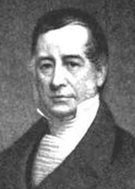 Frederick Augustus Muhlenberg, MD
He was one of the original members of the Lancaster City & County Medical Society and was elected in 1844 as one of its first two vice presidents. He was recognized for his leadership and sense of duty to his community, and served as prothonotary of Lancaster County, as well as Register of Wills. He was active in the Democratic Party and a strong supporter of President James Buchanan.
7
THE MUSSERS
John Musser and his family immigrated to America in 1727 from Switzerland and settled in southeast Lancaster County. He apprenticed with another physician to study medicine. As was the case with many other physicians, he was also a farmer.
He acquired land in what is today part of Manor Township and contiguous to Conestoga Manor, where the Conestoga tribes resided. This section of land was known as “Indiantown,” and it is where the colonial powers came to negotiate trades and treaties. Later, in 1763, this property became infamous when the “Paxtang Gang” massacred 20 unarmed Conestoga Indians there. The Mussers were thought to be opposed to this gang and their despicable actions.
John Musser died in 1752, and his son, Jacob, who learned medicine from his father, inherited the property and built the homestead. One of Jacob’s sons, Benjamin Musser, born in 1749, was a farmer who also learned medicine from his father.
Benjamin Musser fathered 18 children with two wives. He built a very large house to accommodate his family, and in time, the doctor provided a room for an apothecary, as well as rooms for overnight stays for some of his sickest patients.
Benjamin Musser is credited with developing “white salve,” which was used to treat venous ulcers of the lower extremities. The white salve is white petrolatum with rectified turpentine oil, white wax, and perfume. The mixture provides soothing relief for dry skin and minor burns, including sunburn. It is used to this day.
Two of Benjamin’s sons studied with their father without further formal medical education. Joseph Musser practiced in Marietta for a while before he left for Ohio; Martin Musser practiced in Lampeter. Martin’s son Benjamin became a physician and was the first of the Mussers to acquire a medical degree. Four of Benjamin’s grandsons and five of his great-grandsons also acquired degrees in medicine.
Among the most notable was John H. Musser, MD (1856-1912). He was a grandson to Martin, grew up in southern Lancaster County, and was educated in the Strasburg schools and Millersville State Normal School. He acquired his medical degree from the University of Pennsylvania in 1877. He practiced in Philadelphia, joined the faculty at his alma mater, and grew to national prominence as a result of his more than 200 scientific papers and his highly authoritative dissertations on managing gallbladder disease.
His medical text,
Medical Diagnosis, was popular and widely used by medical students and practicing physicians. His concern for accessible health care for the poor led him to help establish the social service department at the Hospital of the University of Pennsylvania. He also became active in medical politics, serving as president of the AMA beginning in 1904, during the time of the major medical education reforms pioneered by Abraham Flexner, MD.
6
John Musser, MD, born in 1936, and grandson of John H. Musser, was a classmate of this article’s author at the Perelman School of Medicine of the University of Pennsylvania. He practiced internal medicine in the Philadelphia area.
THE FAHNESTOCKS
The Fahnestocks, as they were known, came from a long line of physicians beginning with Johann Deidrich Fahnestock, born in Amwell, New Jersey, in 1733. It is not known how he acquired his medical education, but it is known that he served in the Revolutionary War. He settled and practiced in Ephrata, where he spent most of his life.
One of the more colorful Fahnestocks was William Baker Fahnestock, MD (1804-1886), an 1825 graduate of the University of Pennsylvania who practiced in Lancaster for 30 years, became a charter member of the Lancaster City & County Medical Society, and owned a drug store on West King Street. He was known for his investigative work in animal magnetism, spiritualism, and clairvoyance.
He also endorsed the theory of statuvolism or self-hypnosis. His treatise on the latter gained him an international reputation. He was a pioneer in daguerreotype photography (photographs produced on silver-covered plates) and was known for producing excellent images.
He engaged in politics and supported the candidacy of James Buchanan. He and his father-in-law, Henry M. Reigert, rode out to Wheatland, beyond the city’s western perimeter, to be the first to notify Mr. Buchanan that he had been elected to the presidency in 1856.
8
THE RAUBS
The first member of the Raub family to become a physician was John K. Raub, MD, who was born in 1828 in Strasburg Township in southern Lancaster County. With only a high school education, he became a teacher, studied medicine with Benjamin Musser, MD, and acquired a medical degree from the University of Pennsylvania. He first established his practice in Quarryville, then moved his practice to the nearby village of New Providence. He served in the Civil War as a surgeon and died in 1867.
John’s cousin, Michael, born in 1838, was known as a nature lover and bird collector, graduated from Jefferson Medical College in 1865, practiced in Lancaster, and served as the museum curator for the North Museum during his retirement.
John’s brother, Henry E. Raub, MD, born in 1830, also became a teacher after graduating from high school and apprenticed with his brother. He acquired his medical degree from the University of Pennsylvania and joined his brother in practice in Quarryville. He became one of its leading citizens, serving as a school director, burgess, director of the Southern Mutual Insurance Company of Lancaster County, and a founder of the Quarryville National Bank. He played a major role in the development of the Pennsylvania Railroad between Quarryville and Lancaster.
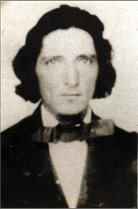
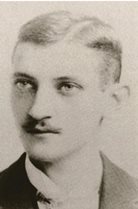 Henry E. Raub, MD Richard Vaux Raub, MD
Henry’s son, Richard Vaux Raub, MD, was born in 1872, worked in Dr. T. M. Rohrer’s drugstore, studied medicine with his father, and graduated from Jefferson Medical College in 1893. Using the letterhead of the “Office of Southern Mutual Insurance Company of Lancaster County, Pa.,” dated November 1, 1893, Henry wrote to advise Richard after hearing news of Richard’s illness:
Dear Son, We are sorry to hear that you are not well. If you are not well enough to go and see Dr. Chapman send your chum after him. That is the way we used to do it. I send you some tablets of antikamnia [an analgesic] for your head. Take one occasionally every three or four hours if it does relieve your headache. I would take four or five capsules of quinine every day for several days until you feel better.
You will also find some antivomit tablets which you take for a sick stomach. I have written for Uncle Seal to go up and see you.
I mailed you a capsule box with some medicine in it today. Will send you some more in a box. If you can’t get out, get your chum to get you what you need in the diet line. Don’t starve yourself.
The boys have two foxes, Larry and Ege is about the same. The pheasant was dead and came from Monroe Co. The boys got four rabbits, two apiece, and John got three, dad none. Going to send you tripe, cheese, bread, butter, jelly, etc. Dress warm. If bowels are costive I would take some of the anticonstipation tablets to loosen them. Then I would take camphor, Opii & Lead tablets one at a time according as you stand in need of each. But I would take a portion of Quinine for several days or weeks until you feel better.
Write as soon as you get this.
Your Affectionate Father,
H. Raub9
Richard practiced in the village of Homeville but returned to Quarryville to take over his father’s practice when Henry died. The following eulogy of his father appeared in the
Quarryville Sun on July 26, 1901:
Hence, he is a figure sadly missing on the roads of the lower end, the gaunt figure of an old-time physician, in an old-fashioned and never new gig or sulky, seen in storms and sunshine, in rain and sleet, in blizzards and fair skies, fearing nothing, caring for nothing save duty in response to a call to relieve the ailing, or sooth the last hours of the dying.
Sadly, Richard died at the early age of 42. He was inspired by his father and was every bit as dedicated and devoted to his patients. At his funeral, many people mourned who had mourned his father before him. At the time of his death in 1914, the Quarryville newspaper printed the following commentary about Richard:
His funeral and the manifestations of heartfelt grief and personal loss by the hundreds in attendance … strikingly illustrate the affectionate relations that exist in the rural district between the man who ministers to their physical wants and the people to whom he ministers. The life of a country doctor is a sacrifice. His fees are small and his hours long. No night is too dark, no storm too tempestuous for him to brave. He catches sleep, as he climbs the steepest hills, and the faithful horse neighs at the stable door to tell him he’s at home. He knows no luxury of office hours, nor specializes on any one disease. He reduces the fractured limb and ofttimes soothes the broken heart. He responds to the call of the poor, and he never takes advantage of the well to do. In his laborious work, he is seldom seen in a house of worship but in the love of his profession and nobility of his practice, he seems to walk with God.… If St. Peter honors a pass, it is when the weary country doctor knocks for admission and begs for rest.10
AUTHOR’S NOTE
Unfortunately, there is not room to discuss the many important contributions by countless members of other medical families. Notably, Henry Wentz, MD, had quite an impact on the new specialty of Family Medicine and the residency program at Lancaster General Hospital. He will be featured in the final installment of this series in early 2027. Read more about his family by clicking here.
REFERENCES
1. Ellis F, Evans S.
History of Lancaster County, PA. Everts & Peck; 1883.
2. Heckman J. The Atlee family: a progression of medicine in Lancaster County through lineage. Lancaster Medical Heritage Museum. 2018. Accessed March 19, 2026.
https://lancastermedicalheritagemuseum.org/wp-content/uploads/2018/10/The-Atlee-Family-by-Jillian-Heckman.pdf
3. Tindall HL, ed. The Atlees: giants of Lancaster medicine.
Lanc Med. 1976;52(2):110-112.
4. Longo LD. Classic pages in obstetrics and gynecology. Case of ovarian tumors — both the right and the left being removed at the same operation. by John Light Atlee, The New York Journal of Medicine and the Collateral Sciences, vol. 1, 1843.
Am J Obstet Gynecol. 1976;124(2):205.
5. Wentz HS. Chapter 14: Epidemics in Lancaster County, cholera. In
Our Medical Heritage. Lancaster City & County Medical Society; 1995:90-91.
6. Wentz HS. Chapter 23: The Doctors Musser. In
Our Medical Heritage. Lancaster City & County Medical Society; 1995:143-146.
7. Wentz HS. Chapter 31: Drs. Muhlenberg. In
Our Medical Heritage. Lancaster City & County Medical Society; 1995:171-172.
8. Wentz HS. The Fabulous Fahnestocks. In
Our Medical Heritage. Lancaster City & County Medical Society; 1995.
9. Archival Collection, Lancaster Medical Heritage Museum, Lancaster, PA.
10. Wentz HS. Physicians and medicine in southern Lancaster County.
J Lanc Co Hist Soc. 1987;91(4):138-172.